Non-Alcoholic Cocktails: The Biggest Bar Trend of 2026
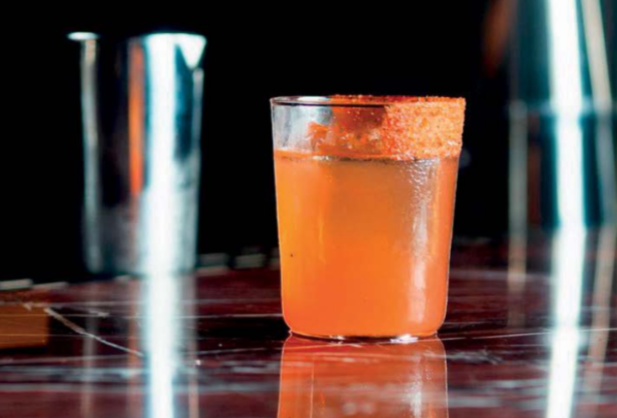
While hopping some of the best bars around the world, from Dubai to Sydney and London to Singapore, one pattern is hard to miss. Nights out are less about excess and more about quality time, conversation, and how you want to feel the next morning. The preference started to shift from straight spirits to cocktails. In that continuing shift, a new kind of drink has come into focus. A complex, carefully structured, made using high quality ingredients and entirely alcohol-free.
Welcome to the world of zero proof or no alcohol cocktails. These are not the sugar syrup and juice mixed with soda and served as mocktails. These beverages are being designed with the same intent and technique as cocktails. And in many cases, they demand even more precision. India too is moving in step with this global trend. As our bar culture matures, zero-proof drinks are no longer a token line at the end of the menu. It is as prominent as alcoholic drinks.
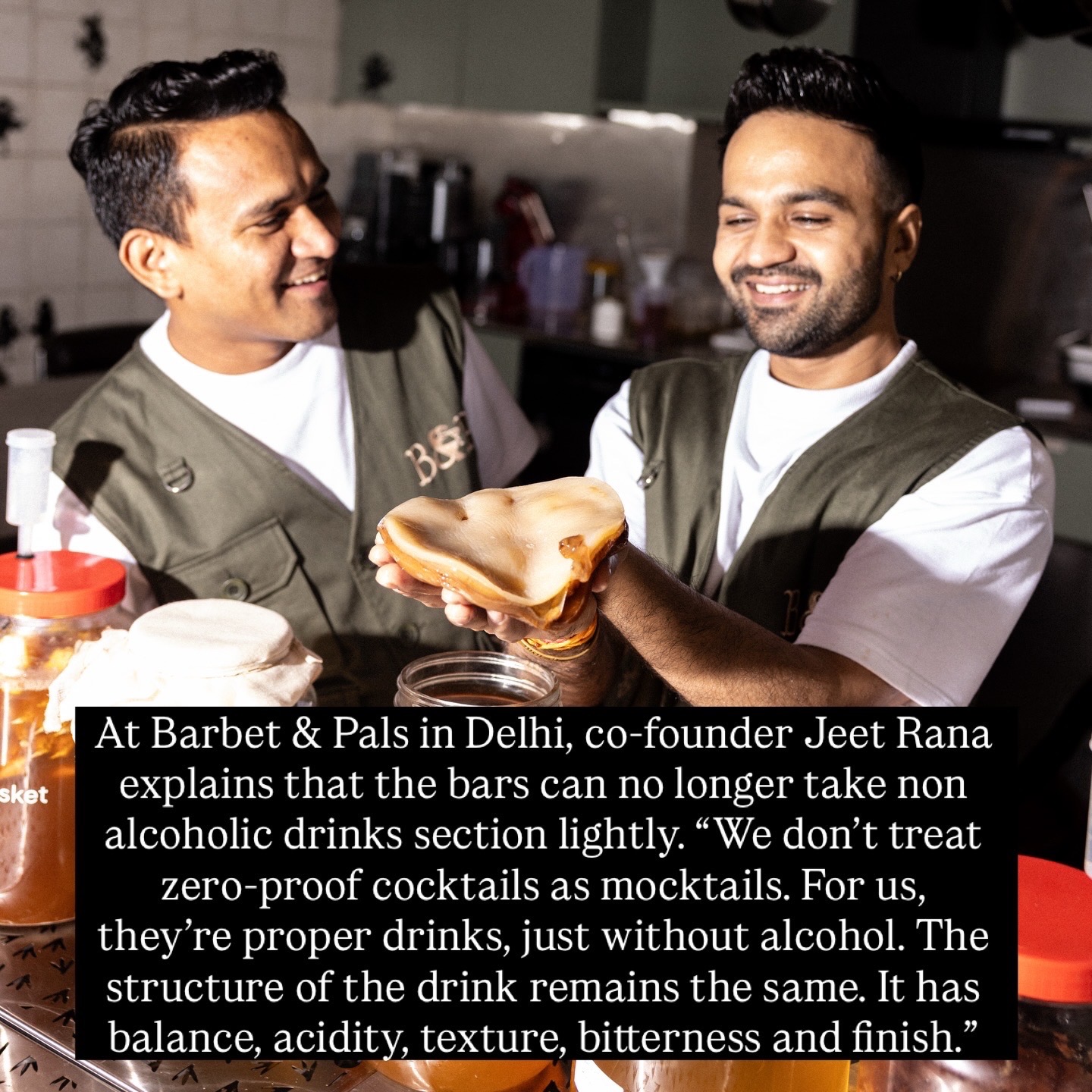
At Barbet & Pals in Delhi, co-founder Jeet Rana explains that the bars can no longer take non alcoholic drinks section lightly. He asserts language matters. “We don’t treat zero-proof cocktails as mocktails,” he says and adds, “For us, they’re proper drinks, just without alcohol.” The structure of the drink, he explains, remains the same. It has balance, acidity, texture, bitterness and finish.
To build that structure, Rana’s team turns to house ferments such as kombucha, mead, tepache, and seasonal ciders made without pushing alcohol levels up. These elements bring dryness and natural acidity, preventing drinks from sliding into the territory of sweetened juice. “Without alcohol, there’s nowhere to hide. It really becomes a test of skill,” Rana says.
Across India, bars are roping in best of bar consultants to deliver serious non alcoholic beverage menu. Recently in India to curate menu for The Mission Bay in Delhi, San Francisco based, Steph Gonnet of West Bev says she builds menus with the same philosophy. Spirits, she points out, are just one ingredient in a cocktail, which means they can be omitted without diminishing the drink’s integrity. Her team creates layered, nuanced non-alcoholic beverages that sit on equal footing with alcoholic ones. Calling them mocktails, she argues, undermines the work behind them. They are cocktails without alcohol that are balanced, complex, and complete.
This reframing is key to understanding the movement. For decades, ‘mocktail’ implied an afterthought, an inferior substitute for those who couldn’t drink alcohol. Today’s zero-proof drinks are not substitutes, they are well thought out compositions. The absence of alcohol is no longer a limitation.
The rise of these drinks is closely tied to generational behaviour. Younger consumers, especially Gen Z, are drinking more mindfully. Many alternate between alcoholic and non-alcoholic rounds, or skip alcohol altogether on certain nights. But they still want the theatre of the bar: thoughtful glassware, layered flavours, and something that feels the part.
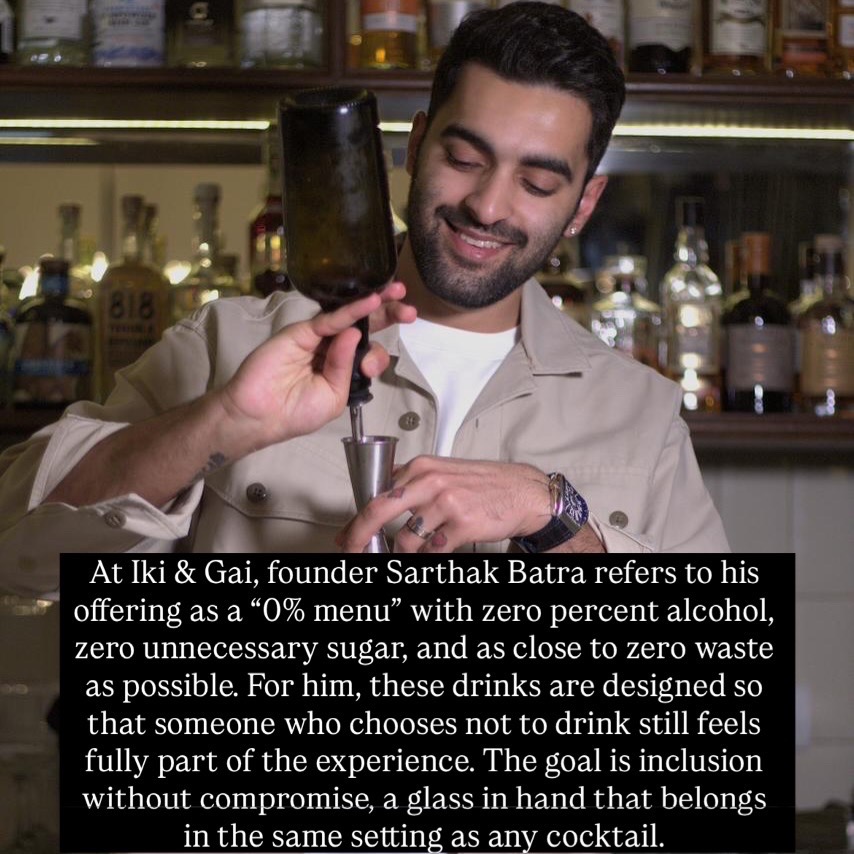
At Iki & Gai, founder Sarthak Batra refers to his offering as a “0% menu” with zero percent alcohol, zero unnecessary sugar, and as close to zero waste as possible. For him, these drinks are designed so that someone who chooses not to drink still feels fully part of the experience. The goal is inclusion without compromise, a glass in hand that belongs in the same setting as any cocktail.
Batra also sees a broader awareness shaping customer choices. As India’s bar scene expands rapidly, with new openings every month, it’s natural that menus evolve to serve a wider spectrum of guests. Many now prioritise how they feel during and after a night out. He observes a well-built zero-proof drink supports that mindset while preserving the social ritual of going out.
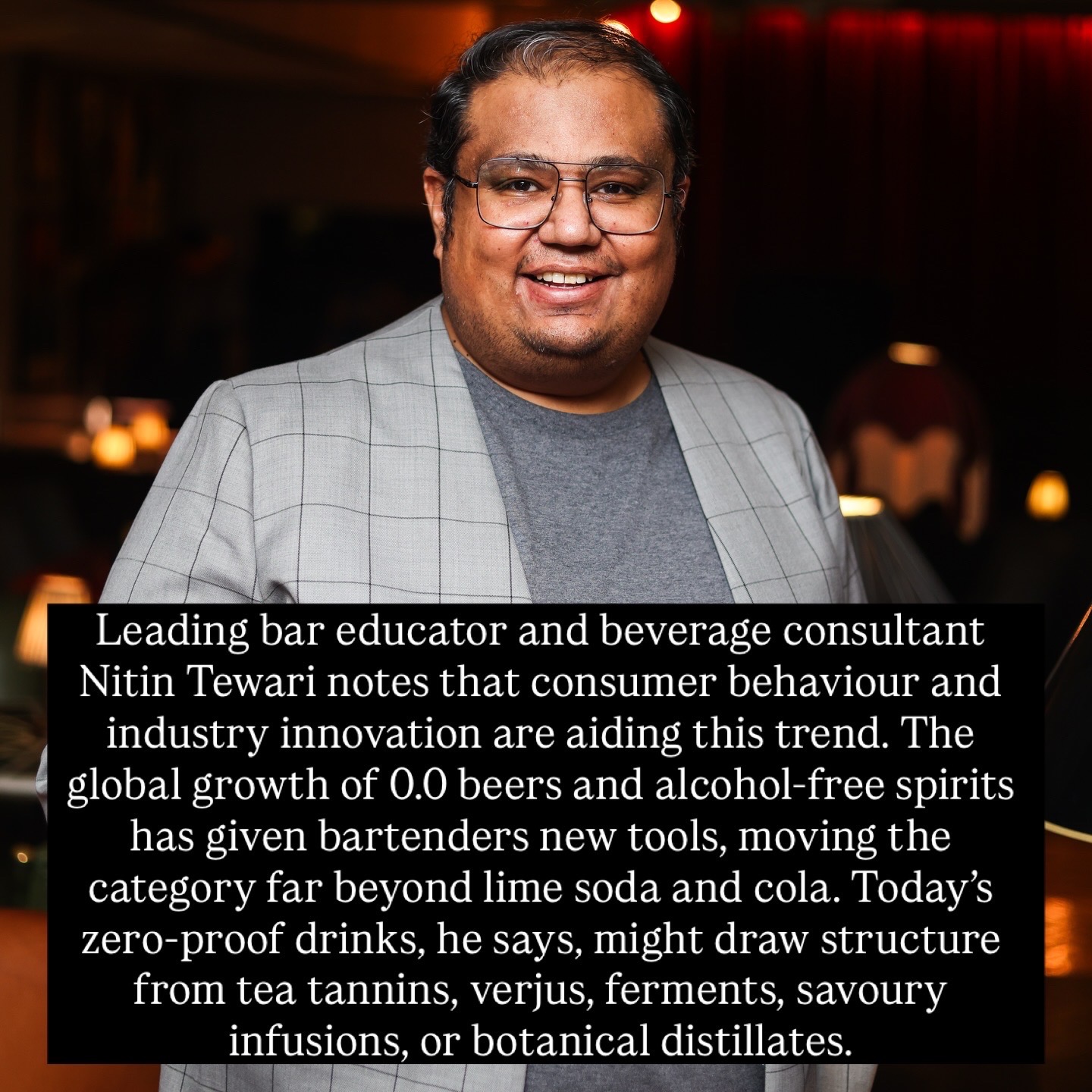
Leading bar educator and consultant Nitin Tewari notes that consumer behaviour and industry innovation are reinforcing each other. The global growth of 0.0 beers and alcohol-free spirits has given bartenders new tools, moving the category far beyond lime soda and cola. Today’s zero-proof drinks, he says, might draw structure from tea tannins, verjus, ferments, savoury infusions, or botanical distillates.
In India, Tewari adds, the relevance runs even deeper. A significant portion of the population does not consume alcohol for cultural, religious, or personal reasons. “Strong non-alcoholic programs make restaurant bars more inclusive, especially in family-friendly environments, while also strengthening beverage revenue in a category that was once overlooked,” he suggests.
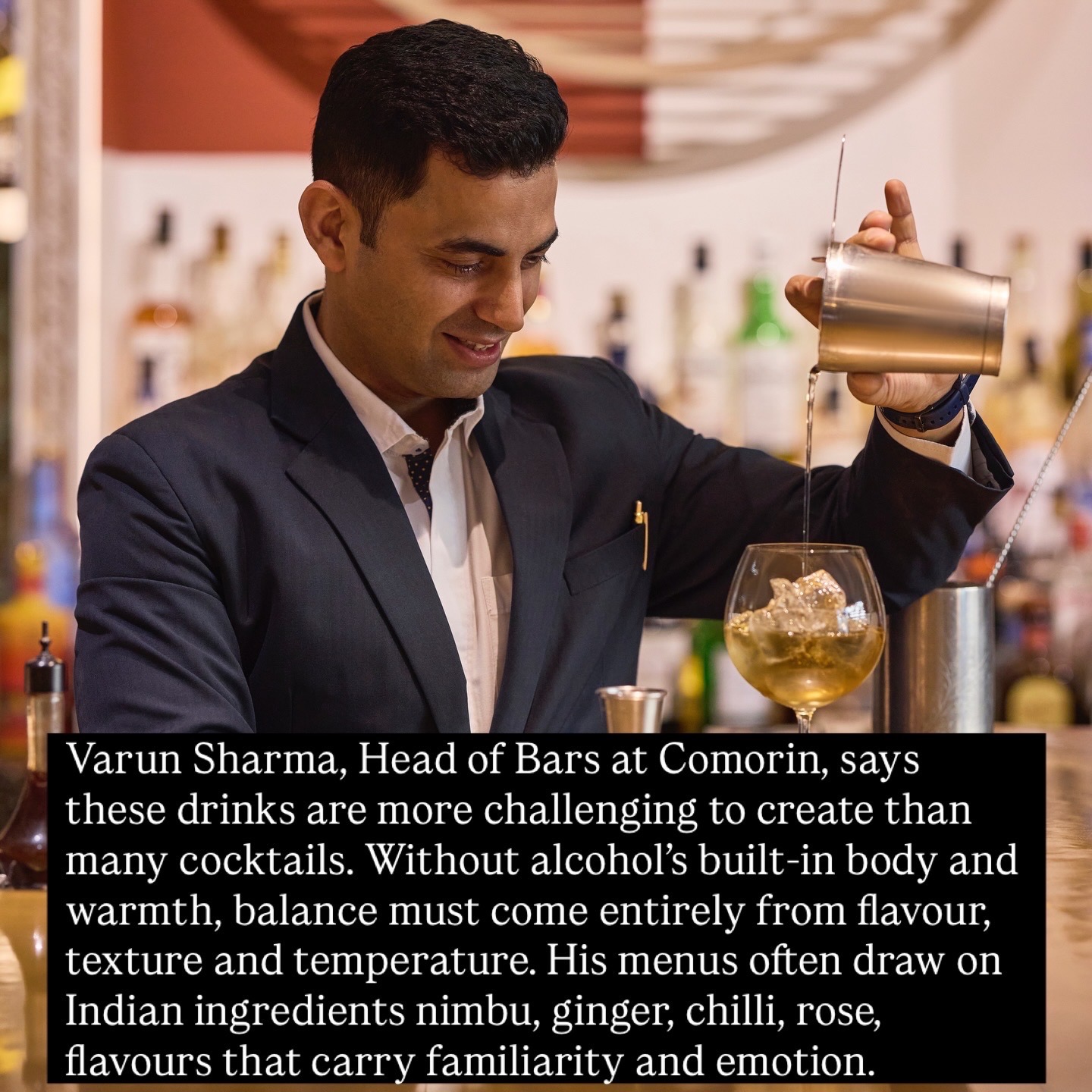
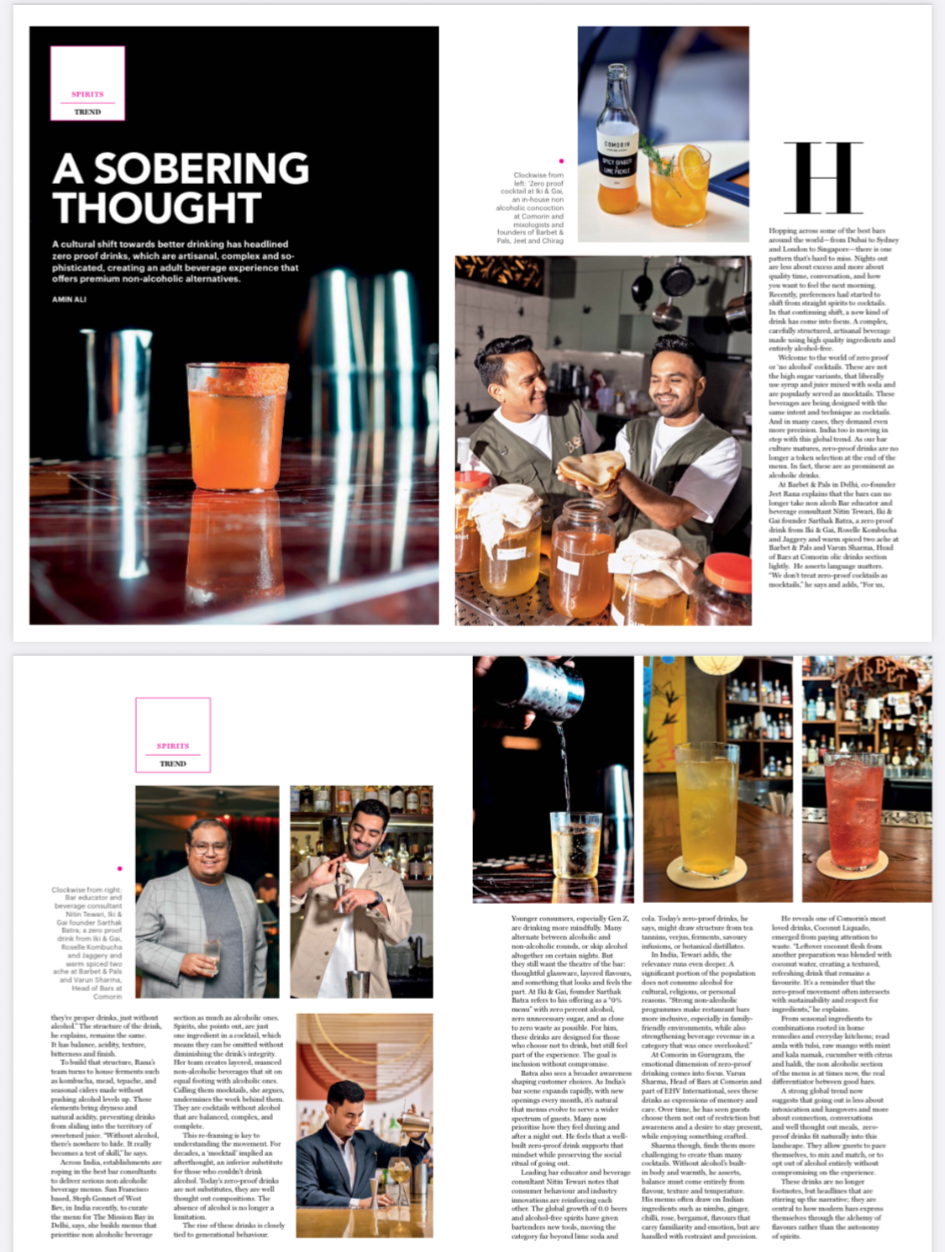
At Comorin in Gurugram, the emotional dimension of zero-proof drinking comes into focus. Varun Sharma, Head of Bars at Comorin and part of EHV International, sees these drinks as expressions of memory and care. Over time, he has watched guests choose them not out of restriction but awareness and a desire to stay present and feel good while enjoying something crafted.
Sharma though finds them more challenging to create than many cocktails. Without alcohol’s built-in body and warmth, he asserts, balance must come entirely from flavour, texture and temperature. His menus often draw on Indian ingredients nimbu, ginger, chilli, rose, bergamot, flavours that carry familiarity and emotion, but are handled with restraint and precision.
He reveals one of Comorin’s most loved drinks, Coconut Liquado, emerged from paying attention to waste. “Leftover coconut flesh from another preparation was blended with coconut water, creating a textured, refreshing drink that remains a favourite. It’s a reminder that the zero-proof movement often intersects with sustainability and respect for ingredients,” he explains.
From seasonal ingredients to combinations rooted in home remedies and everyday kitchens , from amla with tulsi, raw mango with mint and kala namak, cucumber with citrus and haldi, non alcoholic section of the menu at times is now the real differentiator between good bars.
With a strong global trend where going out is less about intoxication and hangovers and more about connection, conversations and well thought out meals, zero-proof drinks fit naturally into this landscape. They allow guests to pace themselves, to mix and match, or to opt out of alcohol entirely without compromising on the experience.
These drinks are no longer footnotes. They are central to how modern bars express themselves through flavour rather than spirits.
Lead image: Iki & Gai
Post a comment