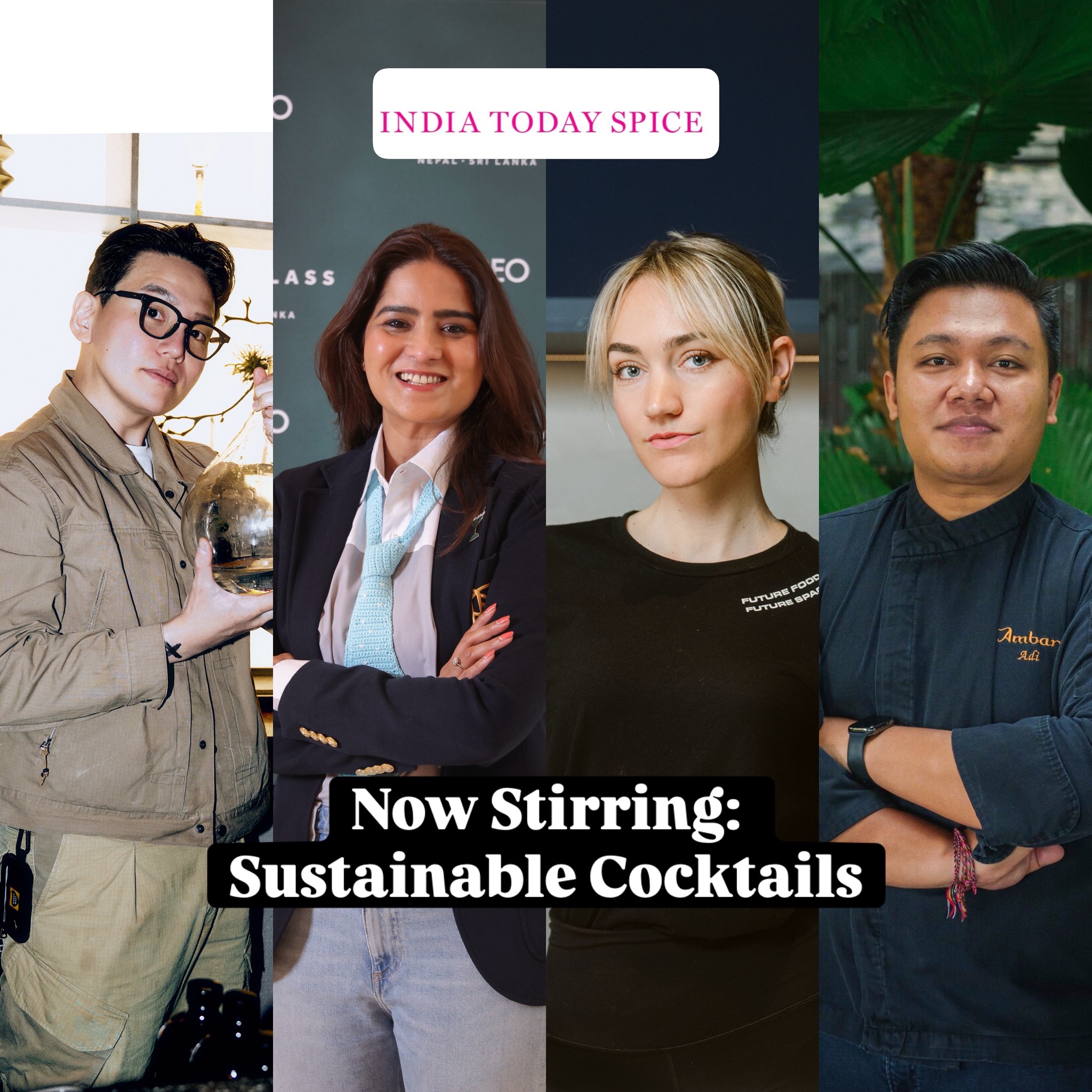
New Drinks Trend: Sustainable Cocktails
The top kitchen were known for the farm-to-table movement. It is the bars now that are leading the sustainability narrative. From foraging, seasonal ingredients to narrating local story through drinks, bars are now championing the ‘responsible consumption’ narrative in their own style.
At Ambar Ubud Bar at Mandapa Reserve, Bali, their Spirits of the Jungle cocktail festival began not behind the bar, but deep inside a forest. Visiting mixologists from across Asia weren’t handed menus or spirits. They were handed baskets. Led into a nearby forest, they foraged for wild herbs, berries, and roots, returning with boxes of ingredients they barely knew hours earlier. By evening, those same ingredients had found their way into drinks that tasted like Ubud and narrated a story of Bali.
It felt less like a bar takeover and more like a culinary expedition. And that’s what’s the biggest bar trend.
For years, terms local, seasonal, and farm-to-table belonged almost exclusively to kitchens. Restaurants built entire identities around proximity to produce, relationships with farmers, and the freshness of ingredients. Bars, in contrast, leaned on global supply chains. They flaunted spirits, syrups, and citrus flown in from exotic corners. That divide is now dissolving. Across the world, cocktails are entering their own era of consciousness.
“Bartending is reconnecting with its roots,” says Adi San, who leads the bar program at Ambar. His approach is built on working closely with local farmers and communities, often incorporating rare, hyperlocal ingredients into familiar formats. “It’s not just about flavour,” he explains and adds, “It’s about linking the drink to its origin, the land and the people behind it.”
His cocktail My Grandma captures this philosophy succinctly. Inspired by the Balinese tradition of chewing betel leaf, it layers turmeric, wild honey, and a house-made liqueur into a concoction that feels classic yet deeply personal. It’s less a drink, more a translation of memory into a glass.
This shift —from product to provenance— is being seen across top bars, with each geography implementing as per their local availability.
At FURA in Singapore, sustainability isn’t framed as a buzzword but as responsibility. “There’s no single rule to define it,” says Christina Rasmussen, co-owner and head chef. “For us, it’s about future foods, circularity, and understanding the impact we can have when we serve hundreds of guests every week,” she says
Operating in a city where only about one percent of land is allocated to agriculture, FURA looks beyond the idea of ‘local’ in a traditional sense. Ingredients are chosen based on abundance, regional relevance, and carbon footprint. Hydroponic greens from Singapore sit alongside produce sourced from the Cameron Highlands in Malaysia that are grown using regenerative and pesticide-free methods.
The drinks themselves push boundaries. Caviar Papi reimagines indulgence with black garlic caviar and herbaceous, low-impact ingredients, while Get The Worm introduces insects as a viable, low-emission protein—fat-washed into spirits and balanced with citrus and spice. It’s sustainability without sacrifice, where flavour remains non-negotiable.
In Seoul, the conversation takes on a quieter, almost philosophical tone. At M+MS, co-founder An Kyoungwon views sustainability less as a trend and more as long-term research. “It’s about ensuring the longevity of the industry,” he says.
Here, upcycling drives creativity. Quince from an on-site tree is distilled into house spirits, while darae—a wild Korean kiwi—is used both fresh and fermented into wine. Their cocktail Mogwa Atteoseo brings these elements together with house-fermented koji, resulting in a drink that is complex yet accessible. Guests don’t just taste the ingredients, he explains, they see them, growing right outside.
Back home in Delhi, the shift is equally pronounced, though rooted in seasonality. At Sidecar, Minakshi Singh has long championed ingredient-led cocktails through a “cocktail of the month” program. “How can a bar call itself seasonal and still serve mango in winter?” she asks.
Each month brings a new highlight, from bael and ber to mulberry, that are harvested annually from their own farm. These ingredients are turned into shrubs, cordials, and liqueurs across their bars, Sidecar, Cocktails & Dreams Speakeasy and The Brook, creating drinks that guests now anticipate as part of a yearly plan. “It matters to people,” she notes and asserts, “But only when it comes from genuine intent—not greenwashing.”
What ties these diverse approaches together is a shared recalibration of what a cocktail represents. It is no longer just a mix of spirits or latest techniques, but a narrative of land, climate, culture, and responsibility.
Guests, too, are changing. These bar owners and mixologists explain there is a growing appetite not just for what’s in the glass, but for where it comes from and why it matters. A drink made with foraged herbs or upcycled fruit carries with it a story, and increasingly, that story is as important as the taste.
And like at top kitchens earlier, the drink story too starts now with a walk in the forest.
This article was published in India Today Spice
Post a comment